No products added!
March 19, 2026

Written by
Nayak AR
Quick Answer For oxybenzone and octinoxate harmful effects
Oxybenzone and octinoxate are chemical sunscreen filters linked to hormone disruption, skin barrier irritation, and ecological toxicity. Understanding oxybenzone and octinoxate harmful effects helps you choose a safe sunscreen alternative.
Introduction
Sunscreen is essential to protect skin from UV rays, tanning, pigmentation, and early aging. Yet not every sunscreen is safe. Many commercial sunscreens still contain aggressive chemical UV filters that cause irritation and disrupt hormones.
Two ingredients you must avoid are:
- Oxybenzone
- Octinoxate
Research, dermatology literature, and regulatory bans highlight the oxybenzone and octinoxate harmful effects. If sunscreen harms the body while trying to protect the skin, it fails its purpose.
This article breaks down the science and introduces a clean, gel-based alternative without toxic filters, formulated by Shwet Kamal Ayurveda.
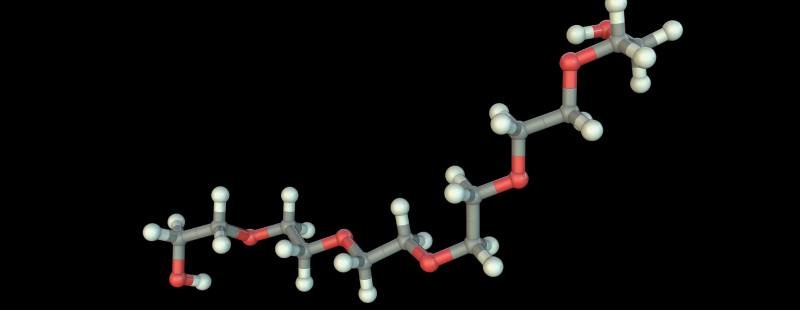
Why Ingredient Safety Matters More Than SPF?
Most people choose sunscreen by looking at SPF 30, SPF 50, or SPF 60, assuming a higher number equals more protection. SPF tells you only how long it may take to burn under UVB rays, not whether the sunscreen is safe to use every day.
The real question is this:
What is your sunscreen doing to your skin while protecting it from the sun?
Chemical sunscreens often feature ingredients that penetrate through the skin barrier and enter the bloodstream. Safe sunscreen selection begins with knowing the oxybenzone and octinoxate harmful effects.
Ingredient 1 — Oxybenzone
Oxybenzone is a chemical UV-filter used to achieve high SPF. Although used widely for decades, research now flags major concerns.
Documented concerns
Risk | Explanation |
Endocrine disruption | Interferes with hormone function and estrogen balance |
Fast absorption | Detected in urine, blood plasma, breast milk, and amniotic fluid |
Photoreactive | Can become unstable under UV exposure, increasing irritation |
Linked to allergies | Higher risk of rashes and dermatitis for sensitive skin |
Oxybenzone was one of the first sunscreen ingredients linked to hormonal disruption in human biomonitoring studies.
Source: Environmental Working Group (EWG)
https://www.ewg.org/sunscreen/report/the-trouble-with-sunscreen-chemicals/
The oxybenzone and octinoxate harmful effects extend beyond humans. Multiple regions, including Hawaii, banned oxybenzone to protect coral reefs and marine life.
Ingredient 2 — Octinoxate
Octinoxate, also known as ethylhexyl methoxycinnamate, absorbs UVB rays. It boosts SPF ratings, which is why many sunscreen manufacturers prefer it.
Issues associated with Octinoxate
- Disrupts thyroid hormone levels
- Increases skin sensitivity during sunlight exposure
- Frequently causes breakouts in oily or acne-prone skin
- Classified as unsafe in infant and maternity formulations
Countries with reef-protection laws ban sunscreens containing octinoxate due to toxicity.
Users searching for clean formulations increasingly prefer an octinoxate free sunscreen India.
Chemical Sunscreen vs. Mineral Sunscreen
Feature | Chemical Sunscreen (Oxybenzone / Octinoxate) | Mineral Sunscreen |
Protection method | Absorbs UV rays by generating heat | Reflects UV rays |
Safety | Penetrates bloodstream | Sits on top of skin |
Suitability | Can irritate oily/sensitive skin | Excellent for all skin types |
Child safety | Not recommended | Recommended |
Most mineral sunscreens contain zinc oxide or titanium dioxide.
But they can feel thick, pasty, and leave a visible white cast.
This is where most users feel stuck:
Mineral sunscreen = safe but heavy
Chemical sunscreen = light but harmful
Shwet Kamal Ayurveda solved this problem.
Meet the Shwet Kamal Neroli Sunscreen Gel
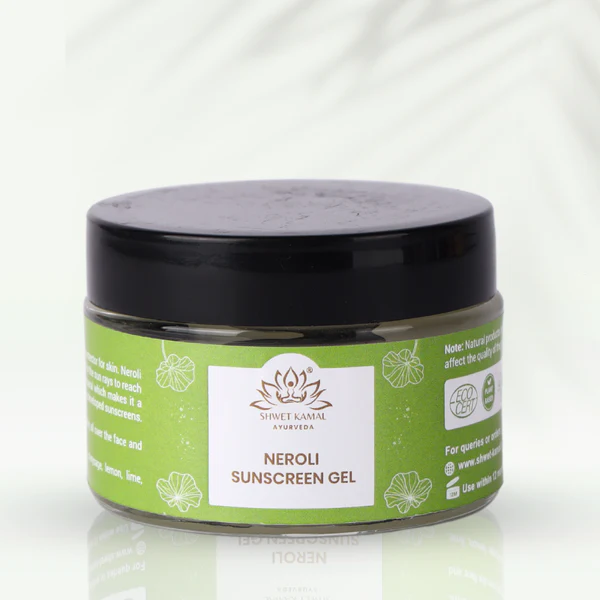
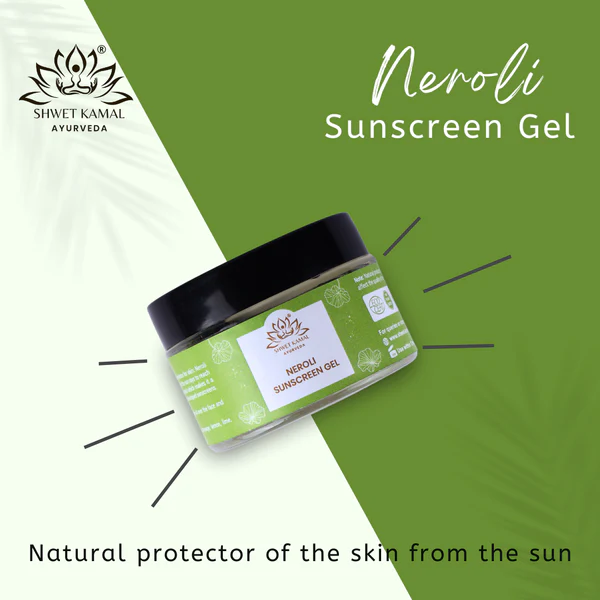
We engineered a sunscreen that has the lightweight, invisible elegance of a gel but is formulated with the safety-first mindset of Ayurvedic principles.
The Shwet Kamal Neroli Sunscreen Gel solves the long-standing frustration users have with sunscreen textures.
“Light as Air”
- Gel-based
- Zero white cast
- Absorbs instantly
- No Titanium Dioxide
- No Zinc Oxide
- Doesn’t clog pores
Free From Harsh Chemicals
- 100 percent oxybenzone free sunscreen India
- 100 percent octinoxate free sunscreen India
- Uses modern, safe, green actives for broad spectrum protection
- Suitable for oily, acne-prone, and sensitive skin
Soothes and Hydrates
Instead of chemical dyes or perfumes, the sunscreen is infused with Neroli essential oil, prized in Ayurveda for:
- Soothing irritated skin
- Calming redness
- Hydrating the barrier
This turns sunscreen into an everyday skin nourishment treatment.
Our Neroli Sunscreen Gel is the solution.
It feels luxurious, disappears into the skin, and avoids all oxybenzone and octinoxate harmful effects.
What Does Sunscreen Actually Do for Your Skin
Daily application:
- Prevents pigmentation
- Reduces sun-triggered melanin production
- Protects collagen and elasticity
- Prevents premature aging
Every serum, vitamin C, niacinamide, or anti-aging treatment works only when sunscreen is applied consistently.
Frequently Asked Question
Does mineral sunscreen leave a white cast
Most mineral sunscreens may leave a white cast because of zinc oxide, but a gel-based mineral sunscreen absorbs faster, blends well, and gives protection without residue, heaviness, or stickiness.
Is sunscreen safe for kids to use every day
Yes, sunscreen is safe for daily use on kids, but only if it’s mineral-based, oxybenzone-free, octinoxate-free, and gentle on delicate skin. Chemical sunscreens should always be avoided.
Do chemical sunscreens really harm the skin
Chemical sunscreens with oxybenzone and octinoxate may disrupt hormones, trigger irritation, and cause allergies. Mineral sunscreens stay on the skin’s surface, offering safer protection without entering the bloodstream.
Which sunscreen is best for oily or acne-prone skin
Gel-based mineral sunscreen works best for oily or acne-prone skin because it’s non-greasy, lightweight, and doesn’t clog pores, preventing sweat-related breakouts and irritation.
Does SPF 50 protect better than SPF 30
Yes, SPF 50 blocks slightly more UVB rays than SPF 30, but the effectiveness depends more on proper reapplication every two hours, especially outdoors, rather than just the SPF number.
How often should sunscreen be reapplied
Sunscreen should be reapplied every two hours, especially outdoors, sweating, or swimming. Reapplication maintains protection, prevents tanning, and avoids UV damage that still occurs even with high SPF.
Why should consumers avoid chemical sunscreen ingredients?
Understanding oxybenzone and octinoxate harmful effects helps consumers avoid hormone disruption, allergies, and long term damage, while recognizing oxybenzone and octinoxate harmful effects encourages safer mineral sunscreen choices daily use.
Do chemical sunscreen ingredients affect the environment?
Avoiding chemical filters reduces environmental damage, improves skin tolerance, and supports reef safety, because oxybenzone and octinoxate harmful effects impact oceans, coral ecosystems, and sensitive marine life significantly worldwide today.
Conclusion
Understanding the oxybenzone and octinoxate harmful effects gives clarity on why chemical sunscreens are not suitable for long-term skin health.
When choosing sunscreen, the goal is not just sun protection. The goal is safe sun protection.
The Shwet Kamal Neroli Sunscreen Gel delivers:
- Invisible gel finish
- Ayurvedic nourishment
- No harsh chemicals
- No white cast
- No endocrine-disrupting filters
It is the perfect daily-use sunscreen for modern Indian skin.
External EEAT Link (for credibility & ranking)
Source: Environmental Working Group database on sunscreen chemicals
https://www.ewg.org/sunscreen/report/the-trouble-with-sunscreen-chemicals/