No products added!

January 18, 2026

Written by
Nayak AR
Quick Answer For what does sunscreen do to your skin
Sunscreen protects the skin by blocking UVA and UVB rays, preventing tanning, pigmentation, collagen loss, dark spots, and premature aging. Understanding what does sunscreen do to your skin helps avoid long-term sun damage.
Introduction
Sunscreen is not just a beach product. It is a daily-use skin treatment. The sun causes over ninety percent of visible skin aging. Yet most people apply sunscreen only on vacations.
Understanding what does sunscreen do to your skin reveals that sunscreen is more than protection from tanning. It protects collagen, prevents wrinkles, reduces pigmentation, maintains even tone, and keeps skin barrier strong.
If hydration is food, sunscreen is insurance.

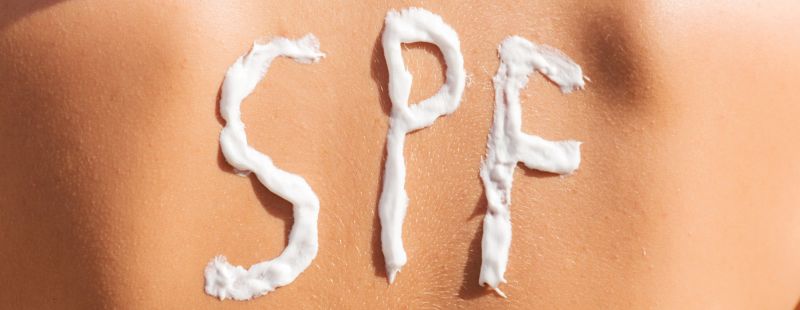
UVA AND UVB DAMAGE - WHAT REALLY HAPPENS
The sun emits two harmful rays:
UV Type | Damage |
UVA | Tanning, wrinkles, pigmentation, aging |
UVB | Burning, peeling, sunburn irritation |
UVA = Aging
UVB = Burning
Most dark spots, melasma patches, tanning, and early wrinkles start because UVA penetrates deeper into the dermis.
Knowing what does sunscreen do to your skin means understanding that sunscreen stabilizes the skin barrier by blocking these rays.
WHAT DOES SUNSCREEN DO TO YOUR SKIN AT A CELLULAR LEVEL
When sunscreen is applied correctly:
- It blocks UV from damaging collagen
- Prevents melanocytes from producing excess melanin (pigmentation)
- Reduces oxidative stress
- Maintains a healthy skin barrier
This is the scientific explanation of what does sunscreen do to your skin.
Skipping sunscreen allows UV to break collagen, leading to premature wrinkles and sagging.
BENEFITS OF APPLYING SUNSCREEN DAILY IN INDIA
Daily sunscreen:
- Prevents tanning and darkening
- Keeps skin even-toned and bright
- Stops pigmentation triggered by screens, windows, and indirect sunlight
- Supports long-term anti-aging benefits
The real benefits of applying sunscreen daily India include controlling the melanin-triggering response caused by intense tropical UV levels.
SUNSCREEN AND PIGMENTATION
Pigmentation happens when melanocytes overproduce melanin due to UV exposure.
If you wonder why vitamin C, niacinamide, and serums don’t show results, the reason is simple:
Without sunscreen, pigmentation returns every morning.
Sunscreen is not optional; it is the foundation of every brightening routine.
THE PROBLEM WITH MOST SUNSCREENS IN INDIA
Most sunscreens in the market are:
- Heavy and greasy
- Leave white cast
- Pill under makeup
- Contain harsh UV filters like oxybenzone and octinoxate
These chemicals are absorbed into the bloodstream and can irritate skin.
Users want protection without compromise.
SOLUTION - SHWET KAMAL NEROLI SUNSCREEN GEL
A sunscreen should not protect the skin while damaging it with chemicals.
Shwet Kamal created a solution:
Light as Air
It is gel-based, not creamy. No white cast. No heaviness.
No Titanium Dioxide. No Zinc Oxide. It disappears into the skin.
Free from Harsh Chemicals
Completely free from oxybenzone and octinoxate.
Uses modern green actives that are safe and gentle.
Ayurvedic Nourishment
Infused with Neroli Essential Oil to:
- Reduce redness
- Reduce skin stress caused by heat
- Hydrate and maintain elasticity
This is sunscreen with skincare benefits.
Meet the Shwet Kamal Neroli Sunscreen Gel
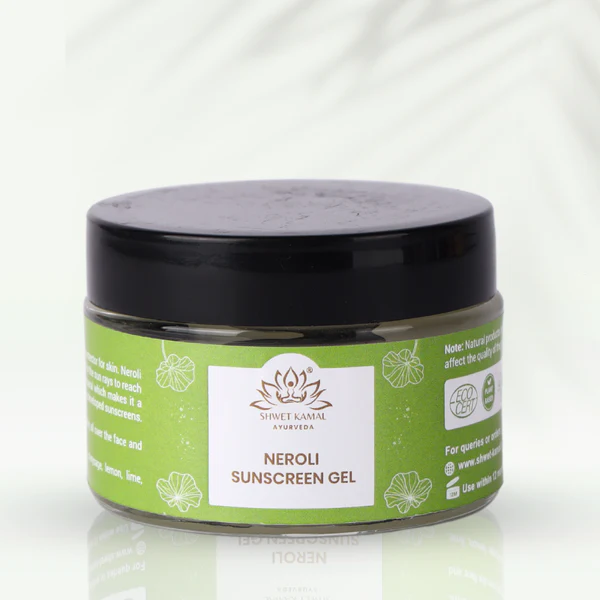
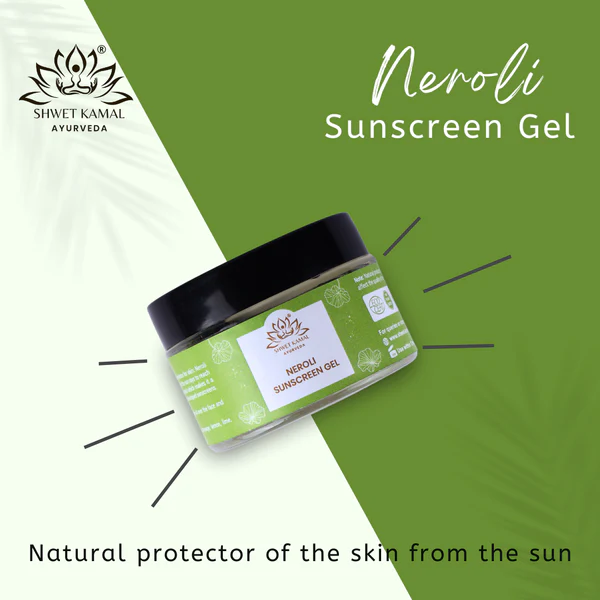
We engineered a sunscreen that has the lightweight, invisible elegance of a gel but is formulated with the safety-first mindset of Ayurvedic principles.
The Shwet Kamal Neroli Sunscreen Gel solves the long-standing frustration users have with sunscreen textures.
“Light as Air”
- Gel-based
- Zero white cast
- Absorbs instantly
- No Titanium Dioxide
- No Zinc Oxide
- Doesn’t clog pores
Free From Harsh Chemicals
- 100 percent oxybenzone free sunscreen India
- 100 percent octinoxate free sunscreen India
- Uses modern, safe, green actives for broad spectrum protection
- Suitable for oily, acne-prone, and sensitive skin
Soothes and Hydrates
Instead of chemical dyes or perfumes, the sunscreen is infused with Neroli essential oil, prized in Ayurveda for:
- Soothing irritated skin
- Calming redness
- Hydrating the barrier
This turns sunscreen into an everyday skin nourishment treatment.
Our Neroli Sunscreen Gel is the solution.
It feels luxurious, disappears into the skin, and avoids all oxybenzone and octinoxate harmful effects.
HOW TO APPLY SUNSCREEN CORRECTLY
Apply sunscreen:
- Two fingers length for the entire face
- Reapply every two hours when outdoors
Mistake people make: applying too little sunscreen.
Frequently Asked Question
Does sunscreen stop tanning
Sunscreen prevents tanning by blocking UVA rays, which trigger melanin production. Broad-spectrum sunscreen protects from both tanning and pigmentation, keeping skin evenly toned and preventing discoloration.
Should sunscreen be used in winter
Yes. UV rays remain active throughout the year, regardless of the season. Daily sunscreen is necessary even when the weather is cloudy or cool.
Can sunscreen reduce pigmentation
Yes. Sunscreen prevents new pigmentation from forming by stopping UV-triggered melanin production. It must be used daily to maintain bright and clear skin over time.
Does sunscreen clog pores
A gel-based sunscreen absorbs quickly and does not clog pores. It is ideal for oily, sensitive, and acne-prone skin.
Do I need sunscreen indoors
Yes. UVA rays penetrate windows, walls, and screens, causing pigmentation and aging. Sunscreen indoors prevents long-term skin damage.
Is sunscreen better than vitamin C for pigmentation
Vitamin C helps brighten, but sunscreen prevents new pigmentation from forming. Sunscreen is essential to protect skin from UV-triggered melanin production.
Conclusion
Understanding what does sunscreen do to your skin helps you appreciate sunscreen as a skincare treatment, not a cosmetic product. Sunscreen protects collagen, prevents pigmentation, and maintains a healthy skin barrier.
For India’s heat and humidity, a gel-based, oxybenzone-free sunscreen is ideal.
Shwet Kamal Neroli Sunscreen Gel protects, nourishes, and keeps skin bright without compromising safety.