No products added!

January 18, 2026

Written by
Nayak AR
Quick Answer does sunscreen block UVA and UVB rays India
UVA rays cause tanning, pigmentation, and aging. UVB rays cause sunburn. To answer does sunscreen block UVA and UVB rays India, only a broad-spectrum sunscreen protects against both.
Introduction
Most people believe sunscreen only prevents sunburn. However, skin damage does not begin with burning; it begins with invisible radiation. The real question is not simply whether sunscreen protects, but does sunscreen block UVA and UVB rays India under real conditions like heat, pollution, sweat, and humidity.
UV rays that damage skin are of two types:
- UVA (causes tanning and premature aging)
- UVB (causes burns and redness)
A sunscreen that protects only from UVB may prevent burning but still allow pigmentation and tanning to occur. To protect skin effectively, you need a sunscreen that blocks both wavelengths.

The Difference Between UVA and UVB
Radiation | Penetrates Skin | Damage Caused |
UVA | Deep into the dermis | Tanning, pigmentation, premature aging |
UVB | Upper skin layer | Sunburn, redness, irritation |
UVB damage is visible as redness.
UVA damage is subtle, deeper, and causes long-term issues like hyperpigmentation and melasma.
Understanding UVA UVB protection explained helps consumers select better sunscreen instead of selecting based on SPF marketing.
Can Sunscreen Really Block UV Rays
The answer:
Not all sunscreens block both rays.
A sunscreen that has only SPF value protects only from UVB.
A sunscreen labeled broad-spectrum protects from both UVA and UVB.
The right question is not “What SPF should I buy?”, but:
- Does the sunscreen block UVA?
- Does the sunscreen block UVB?
- Are the ingredients safe for daily use?
This is why understanding does sunscreen block UVA and UVB rays India is essential for realistic protection.
Why Many Sunscreens Fail in India
Most Indian consumers stand under direct tropical sunlight.
Humidity, sweat, dust, and frequent outdoor exposure make sunscreen reapplication crucial.
Cream-based sunscreens often:
- Become greasy in humidity
- Clog pores
- Cause breakouts and shine
Consumers need a sunscreen that feels weightless, absorbs quickly, and remains stable through sweat.
Gel Sunscreen vs Cream Sunscreen
Feature | Gel Sunscreen | Cream Sunscreen |
Texture | Light, water-like, absorbs instantly | Can be heavy, greasy |
Suitability | Oily, sensitive, humid weather | Dry climates, low humidity |
Finish | Invisible | Can leave residue |
Makeup compatibility | Excellent | Often pills under makeup |
A broad spectrum sunscreen India must be compatible with heat and humidity while remaining non-greasy.
Meet the Shwet Kamal Neroli Sunscreen Gel
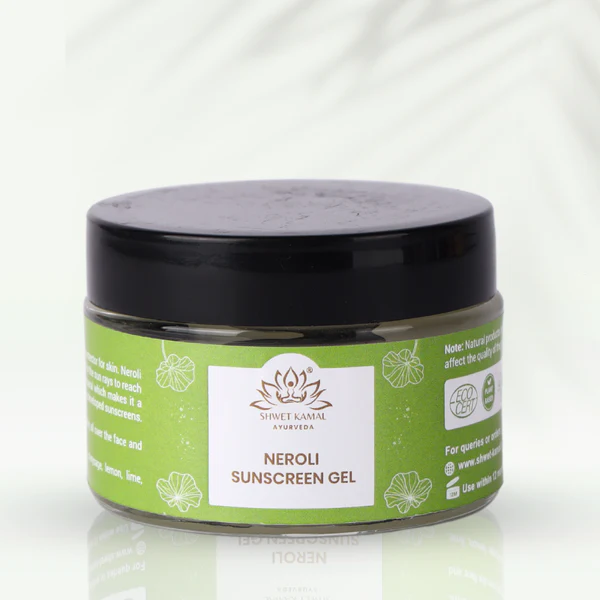
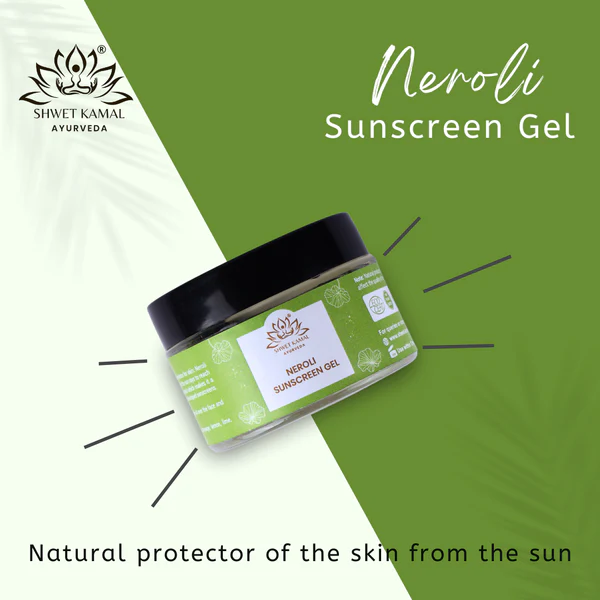
Shwet Kamal engineered a sunscreen that fits the Indian climate while being ingredient-safe and skin-nourishing.
Light as Air
The sunscreen is a gel. It absorbs quickly, disappears on the skin, and does not leave a white cast. It does not contain Titanium Dioxide or Zinc Oxide. It is the perfect base for makeup or a fresh, bare skin day.
Free from Harsh Chemical UV Filters
The formulation is free from oxybenzone and octinoxate. Instead of using chemical UV absorbers linked to irritation and environmental toxicity, the product uses modern safe green actives that provide broad spectrum sunscreen India protection.
Ayurvedic Nourishment
The sunscreen contains pure Neroli Essential Oil. Neroli is known in Ayurvedic practice for soothing sensitivity, calming redness, reducing irritation, and preventing dehydration caused by heat exposure.
A sunscreen should not damage the skin in the process of protecting it.
This formulation protects without contributing to long-term harm.
Frequently Asked Question
Does sunscreen block tanning
SPF protects against UVB burn, but tanning is caused by UVA. Only a broad-spectrum sunscreen that blocks both UVA and UVB prevents tanning, pigmentation, and long-term skin discoloration.
Can I skip sunscreen on cloudy days
No. Up to ninety percent of UVA rays penetrate clouds and windows, causing tanning and pigmentation. Sunscreen is required daily, regardless of the weather or season.
Does sunscreen work indoors
Yes. UVA rays pass through windows and screens and damage collagen. Use sunscreen indoors, especially if working near windows or exposed to direct daylight rooms.
Should sunscreen be reapplied
Yes. Reapply every two hours when outdoors or sweating. Sunscreen effectiveness reduces with sweat and environmental exposure, especially in humid Indian weather.
Does higher SPF mean better protection
Higher SPF protects slightly longer from UVB, but real skin safety depends on UVA coverage and clean formulation. Broad spectrum is more important than choosing the highest SPF number.
Can oily or acne-prone skin use sunscreen daily
Yes. Use a lightweight, gel-based sunscreen that absorbs easily and does not clog pores. Gel sunscreens are ideal for humid weather and prevent sweat-triggered breakouts.
Conclusion
Consumers often look for the highest SPF number but ignore UVA protection and ingredient safety. This misunderstanding leads to skin damage despite daily sunscreen use.
Understanding does sunscreen block UVA and UVB rays India is the key to choosing the correct sunscreen.
Correct sunscreen selection requires:
- Broad-spectrum protection
- Safe formulation
- Gel texture suitable for Indian weather
- No harmful chemical UV filters
Shwet Kamal Neroli Sunscreen Gel meets all three criteria without compromise.